plumbers
Water Heater Replacement Cost in Utah: Gas Country Prices for 2026
Water heater replacement cost in Utah runs $1,050 to $2,100 for gas tanks in 2026. Hard water lifespans, tankless economics, and city prices explained.
In This Article
Water Heater Replacement Cost in Utah: Gas Country Prices for 2026
Utah heats water with natural gas more than almost any state in the country. Decades of low gas rates made the gas tank in the basement close to universal across the state's homes, and that shapes everything about replacement day: the equipment choices, the code items, and the final number.
Water heater replacement cost in Utah runs $1,050 to $2,100 installed for a standard gas tank in 2026. Tankless conversions, which Utah builders and remodelers have embraced faster than most markets, run $2,600 to $5,400, and the less common electric and heat pump options land between $1,000 and $3,600 depending on configuration.
The other force in the room is the water itself. The Wasatch Front runs hard to very hard, and southern Utah runs harder still, which puts mineral scale at the center of every lifespan and maintenance conversation in this state.
Why Gas Sets the Baseline
A like-for-like gas tank swap is Utah's standard job, and it prices in a friendly range because access is usually good. Most units sit in unfinished basements or garages, reachable by stairs a crew can work with, and that keeps labor at $400 to $800 on typical jobs.
Gas work brings venting obligations that electric states skip. The flue connection gets inspected and often updated during replacement, adding $100 to $400 when correction is needed, and older homes converting to high-efficiency condensing equipment need new sidewall venting entirely.
Operating cost is where gas pays the household back. At Utah gas rates, a gas tank typically heats water for meaningfully less per month than an electric tank, which is why like-for-like remains the default recommendation here unless something specific argues otherwise.
The 2026 Cost Picture, Tier by Tier
Standard 40 and 50 gallon gas tanks run $600 to $1,100 in equipment at 2026 prices, with total installed jobs at $1,050 to $2,100 across most of the state. Code items fill their usual role, with expansion tanks at $150 to $350 now standard on the closed systems most Utah water utilities create, plus pans, connectors, and seismic strapping where jurisdictions call for it.
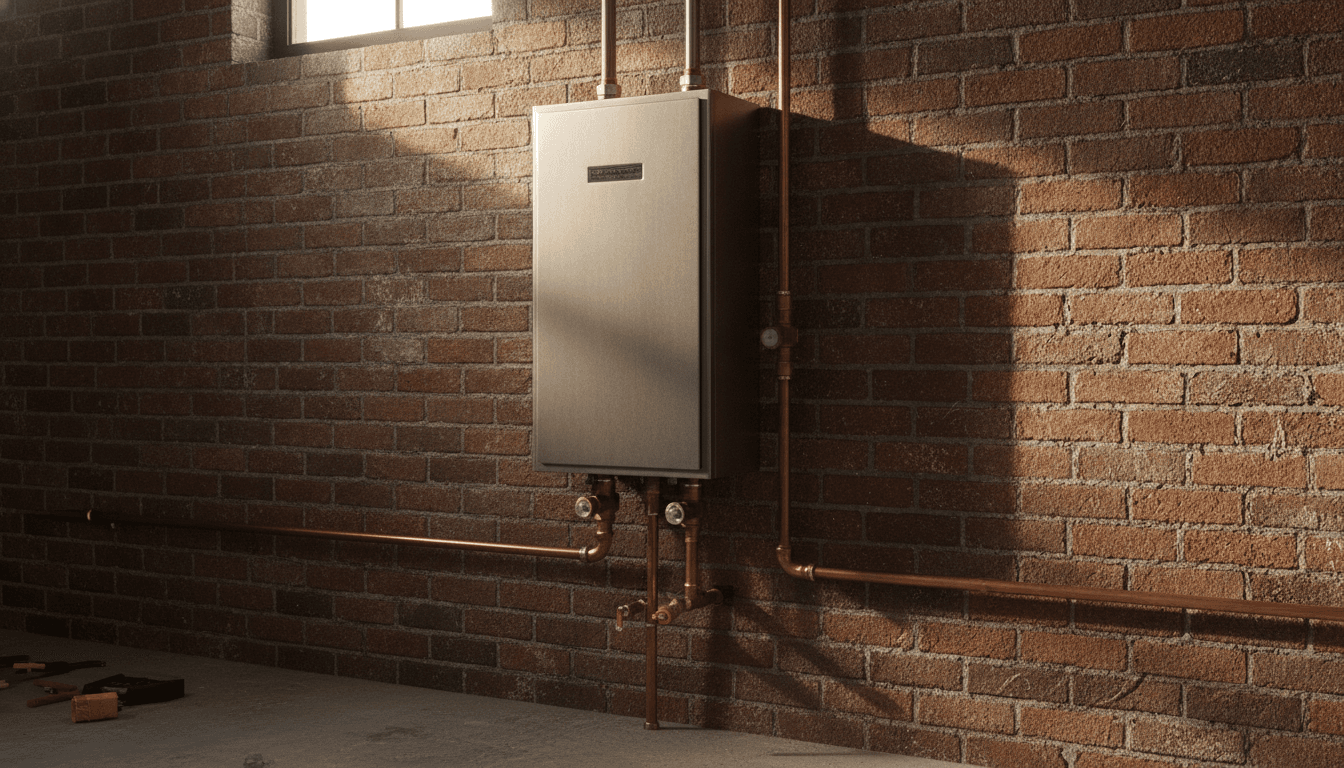
Tankless conversions land between $2,600 and $5,400 installed. Utah's newer housing often arrives tankless from the builder, and replacement-time conversions run smoothest in homes where the gas meter and line sizing already support the higher draw.
Heat pump water heaters exist at the margin here, at $2,100 to $3,600 before federal credits. They make their case in all-electric homes and net-zero projects, with the note that a cold Cache Valley basement in January is a harder environment for them than a St. George garage.
Permits run $50 to $150 statewide, and Utah requires licensed plumbing contractors for the work. Both belong on the quote without asking.
Hard Water Is the Lifespan Story
Wasatch Front water commonly measures in the hard-to-very-hard range, and tanks respond predictably. Scale accumulates on the tank bottom, efficiency sags, the rumbling starts, and unflushed tanks in Salt Lake City, Provo, and Ogden retire at 8 to 10 years instead of 12.
St. George and Washington County run among the hardest water in the state, and southern Utah tanks live Vegas-style lifespans of 6 to 10 years without treatment. Softeners are common equipment down south for exactly this reason.
The countermeasures are the standard three, in escalating order of commitment. Flush the tank annually for free, replace the anode rod around year 5 for $150 to $300, or install a softener at $1,500 to $3,500 and change the math for every water-using appliance in the house.
Tankless owners do not escape the conversation. On Utah water, annual descaling at $150 to $250 or an upstream softener is part of tankless ownership, and skipping it voids the economics along with some warranties.
High-Demand Households and Sizing Up
Utah homes run large, and so does hot water demand in a house running multiple showers, laundry cycles, and a dishwasher in the same evening window. Chronic shortages are a sizing signal, and replacement day is the cheap moment to respond.
Moving from a 40 to a 50 gallon tank adds $100 to $200, a 75 gallon gas tank pushes the job to $1,800 to $2,800, and tankless removes the ceiling entirely for $2,600 to $5,400. Recovery rate matters too, since a gas tank reheats far faster than an electric one of the same size.
For big-demand households already on gas, the tankless conversation is worth having at quote time. It is the configuration Utah plumbers install constantly, and competitive bids reflect that familiarity.
Where in Utah You Are Buying
Salt Lake County and the Silicon Slopes corridor price at the top, with routine swaps commonly $1,200 to $2,100 and tankless work quoted aggressively thanks to deep contractor competition. Utah County runs just behind, with Ogden and the northern Wasatch slightly gentler.
St. George pays near metro rates with the hard-water asterisk shortening cycles, and Logan and Cache Valley add cold-climate details like freeze-protected venting runs. Rural Utah trades lower labor for trip charges, as everywhere in the Mountain West.
Across all of it, three itemized quotes remains the money move. Utah's markets are competitive, spreads of $400 on identical scope are routine, and our Utah plumber directory speeds up the shortlist considerably.
Closing the Job Out Properly
Insist on the full quote in writing: model, capacity, warranty tier, code items, venting scope, haul-away, and the permit. Utah inspections catch venting and expansion tank shortcuts, which is precisely why the corner-cutting bid is cheaper.
Verify the plumbing contractor license with the state and confirm the labor warranty, one year standard, two better. Keep the permit record with your house documents for resale.
Then set the annual flush reminder, because on this water it is the difference between year 8 and year 12. Our home services blog has more Utah cost guides when the furnace or the softener takes its turn.
Straps, Vents, and the Utah Code Details
Utah sits in earthquake country, and the code responds: water heaters here get seismic strapping anchored to structure at the tank's upper and lower thirds. The straps cost $30 to $100 installed and inspectors look for them, so a quote without a strapping line on an older install is incomplete.
Expansion tanks are the other near-universal item, since most Wasatch Front water systems are closed. Add a pan and drain line where the location calls for one, and the code portion of a Utah invoice typically totals $250 to $550 on homes untouched for a decade.
Venting closes the list for gas units. Older atmospheric flues get inspected during replacement, and a heater orphaned in a masonry chimney by a past furnace upgrade may need a liner, a $500 to $1,200 discovery better made at quote time than mid-job.
None of these items is optional where code names them, and every one is cheap next to the damage it prevents. The quote that includes them all, priced and labeled, is the honest one on the table.
When Repair Beats Replacement
A gas tank under 8 years old with a failed thermocouple or gas valve usually repairs for $150 to $450, and that is money well spent. The same goes for elements and thermostats on younger electric units.
Age flips the calculus. On Wasatch Front water, a 9-year-old tank with any real symptom is a replacement conversation, because the next failure is already loading, and repair money spent at year 9 rarely buys two more quiet years.
Leaks from the tank body end the debate at any age. That is corrosion through the liner, no repair exists, and the only useful question left is whether the swap happens by appointment or by emergency.
Recurring pilot outages on an older gas unit deserve one caution: they sometimes signal venting trouble rather than a worn part. That combination is a same-week professional visit, not a relight-and-forget.
Utah Water Heater FAQs
How much does a water heater cost installed in Salt Lake City?
Standard gas tank swaps run $1,200 to $2,100 in the Salt Lake metro in 2026. Tankless conversions typically land between $2,800 and $5,400 depending on venting and gas line scope.
How long do water heaters last in Utah?
Eight to 10 years on untreated Wasatch Front water, and as little as 6 to 10 in St. George. Annual flushing, anode replacement, or a softener stretches any of those numbers.
Is tankless worth it in Utah?
It is one of the better states for it, given gas dominance and installer familiarity, especially for high-demand households. Budget for annual descaling or a softener, since hard water is tankless's only real enemy here.
Do I need a permit to replace a water heater in Utah?
Yes, in essentially all jurisdictions, at $50 to $150, pulled by the licensed contractor. The inspection verifies venting and expansion tank compliance, both common failure points in old installs.
Why does my water heater rumble?
That is scale and sediment boiling water underneath the mineral layer, and on Utah water it arrives early. Flush the tank promptly; if the noise persists on an older unit, start collecting replacement quotes.