pool-service
How to Choose a Pool Service Company in Utah: Wasatch Front and St. George Are Different Jobs
How to choose a pool service company in Utah: hard water and scale, Wasatch Front closings vs. St. George year-round service, DOPL license rules, and quote checks.
In This Article
How to Choose a Pool Service Company in Utah: Wasatch Front and St. George Are Different Jobs
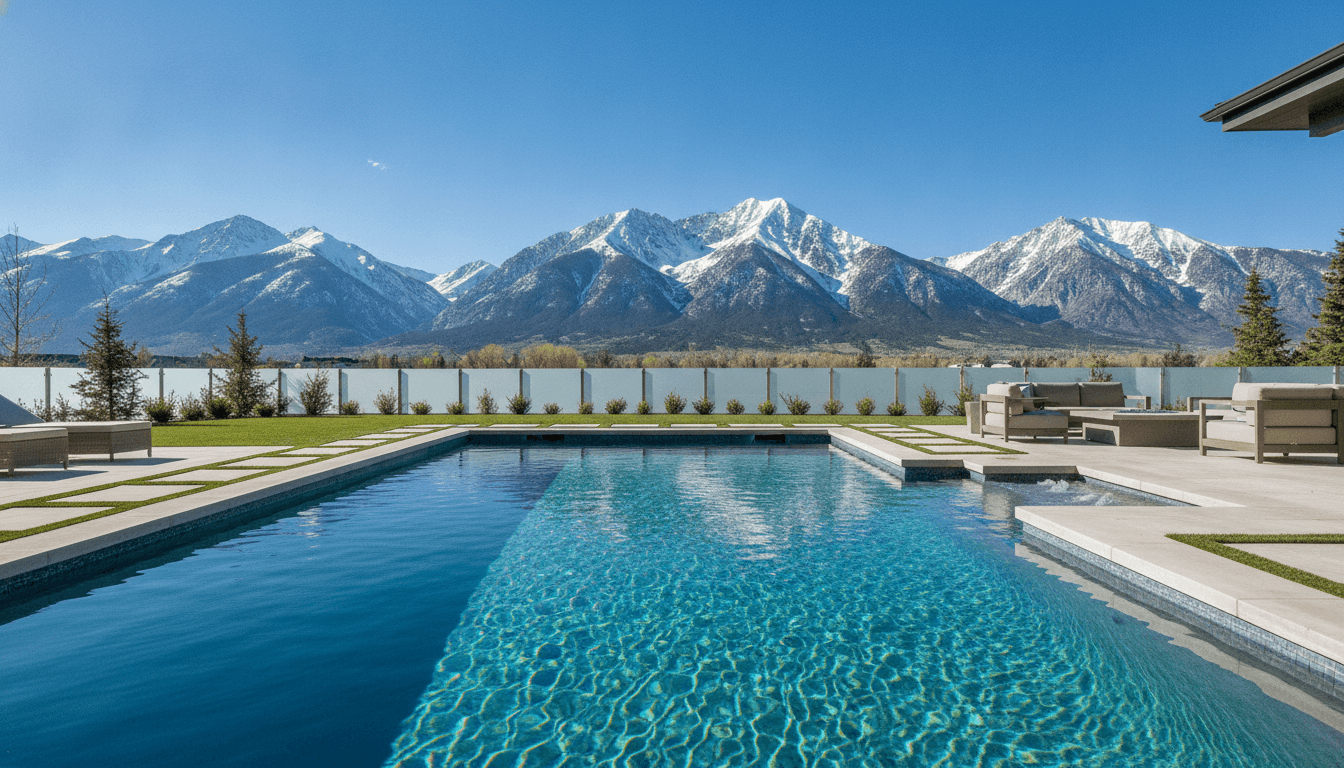
Utah has two pool climates. Along the Wasatch Front, from Ogden through Salt Lake City to Provo, the swim season runs from late May into September and the pool is closed under a cover for six months. In St. George and Washington County, the season runs March through November and many pools never close at all.
A service company that works one of those regions may know nothing about the other, and the questions to ask depend on where you live. The common ground is Utah's hard water, which scales tile and equipment across the state, and the licensing rules that decide who can legally do repairs. This guide covers both regions and the checks that apply everywhere.
Hard Water Is the Statewide Problem
Fill water across Utah is hard, with calcium hardness in the 200 to 400 parts per million range from most municipal sources along the Wasatch Front and higher in Washington County. Evaporation concentrates it, and after a season or two a pool that started at 300 can be at 600 or more, with scale forming on the tile line, in the salt cell, and inside the heater.
A company that understands Utah water tests calcium hardness monthly, keeps pH and alkalinity low enough to slow scaling, uses a sequestrant, and tells you when a partial drain is coming. Draining runs $200 to $500 plus water and should happen in cooler months so plaster does not crack in the sun.
Salt cells scale fast here. Most new pools in Herriman, Lehi, Saratoga Springs, and the Washington Fields area are saltwater, and the cell needs monthly inspection and acid cleaning when scale forms. A company that never opens the cell is letting a $600 to $1,000 part fail early.
Ask directly what the company does about calcium. A company that answers with a plan for testing, sequestrant, and drains has serviced Utah pools. One that talks only about chlorine has not.
Wasatch Front: Openings, Closings, and a Short Season
Closings are the service that matters most from Ogden to Spanish Fork. A Utah closing has to include lowering the water, blowing out every line with compressed air, adding antifreeze, plugging returns and skimmers, draining the pump, filter, heater, and salt cell, adding winter chemicals, and installing the cover. It runs $275 to $475, and companies that skip the line blow-out are the ones whose customers find split plumbing in May.
Ask the company to walk you through the closing step by step. If they cannot, or if they say they do not use a compressor, do not hire them for the closing. A frozen return line under a deck costs $1,000 to $3,000 to repair.
Openings run $250 to $425 and should include a full equipment check, not just turning the system on. Utah winters are hard on pump seals and heater components, and a tech who finds a problem in May saves you a June wait when every company in Salt Lake County is three weeks out.
Weekly in-season service with chemicals runs $140 to $210 per month along the Wasatch Front, with Park City and the Wasatch Back at the top because of drive times and second-home demand. The season is short, so many companies offer packages that bundle opening, four months of weekly service, and closing for $1,600 to $2,800.
Tree cover matters. Pools in the older neighborhoods of Salt Lake City, the Avenues, Sugar House, and along the east bench get heavy leaf drop in October, and the closing should be timed after the leaves are down or the cover will hold a season of debris.
St. George: Year-Round Service and Desert Conditions
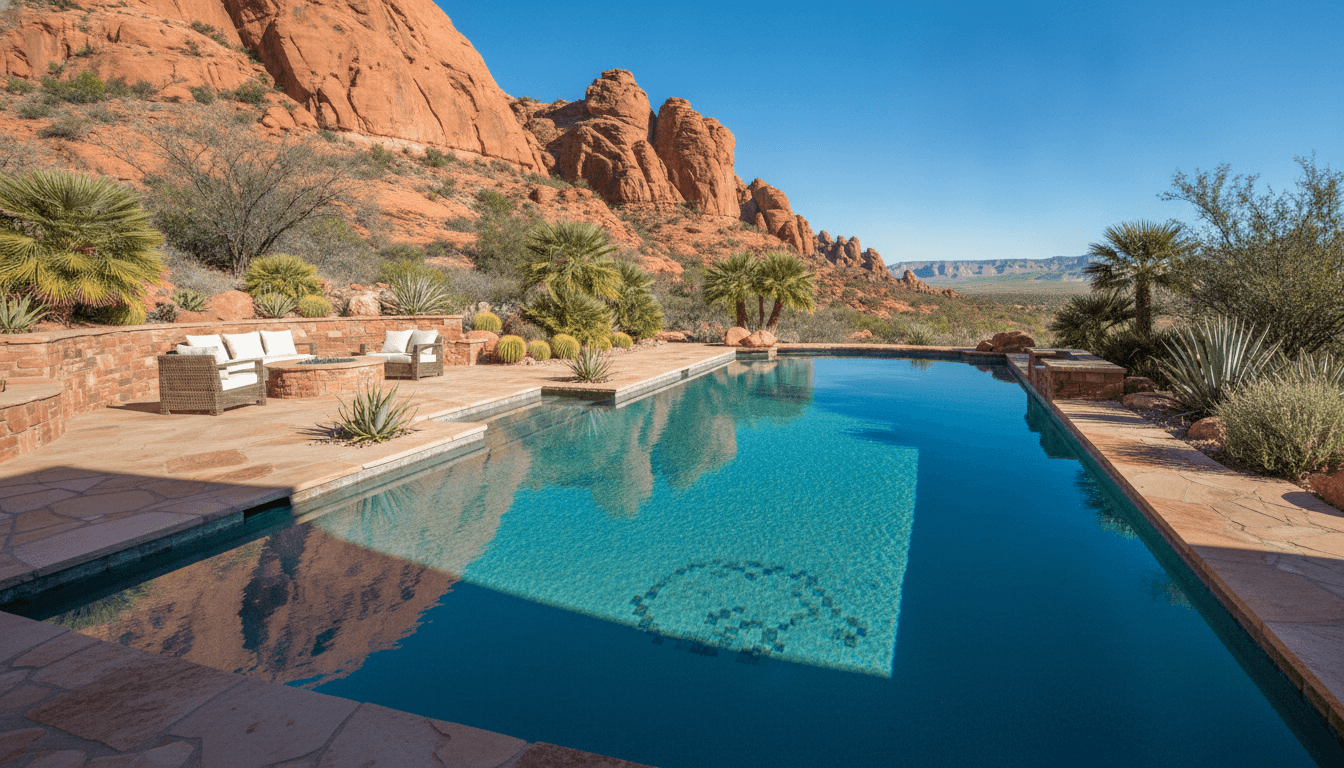
Washington County pools run nine to twelve months a year, and service there looks more like Arizona than like Salt Lake City. Weekly service with chemicals runs $130 to $200 per month, and many owners keep weekly service year-round because the pool never closes.
Evaporation is severe. A St. George pool loses an inch or more of water a week in July, and the fill water is hard, so calcium climbs faster than anywhere else in the state. Drains every two to three years are normal, and the company should have a schedule for it.
Summer water temperatures push past 90 degrees, and chlorine burns off fast. The company should stabilize with cyanuric acid and test it monthly, because tablet chlorine drives it up and a partial drain is the only fix when it exceeds 100 parts per million.
Dust and wind are the other regional factors. Pools in newer subdivisions on the edges of St. George, Washington, and Hurricane take a lot of dust, and cartridge filters need cleaning every two to three months at $75 to $150 each. Ask how storm cleanup is handled after a summer dust event, and whether it costs extra.
The License Rules for Repairs
Utah's Division of Occupational and Professional Licensing requires a contractor license for construction and repair work above $3,000 in labor and materials, and pool work falls under specific classifications. Routine cleaning and chemicals do not require a license.
That threshold means many equipment replacements fall under it. A heater replacement at $3,000 to $5,500 or a full equipment pad rebuild requires a licensed contractor, and a service company doing that work should hold the license or subcontract to one. Electrical work on pump motors and controls requires a licensed electrician regardless of amount, and gas heater work requires a licensed plumber or gas fitter.
Ask which licenses the company holds and check the numbers on the DOPL website. For the cleaning side, ask for a certificate of general liability insurance of $1,000,000 or more and confirm workers' compensation, which Utah requires for employers.
A Certified Pool Operator credential is the industry training standard, and Utah requires it for commercial pool operators. Residential techs who hold it have been trained in chemistry and safety.
Comparing Companies Wherever You Are
Require a site visit before any quote. Pool size, tree cover, equipment age, and salt versus chlorine all change the time per visit, and a phone quote will be revised after the first visit.
Line up the same items for each company: monthly rate, chemicals included or not, vacuuming, filter cleaning cost, opening and closing prices where applicable, repair labor rate, license status, and whether they send visit reports. Compare full-season or full-year totals rather than monthly rates.
Visit reports are the reliability check. Companies using route software send a timestamped report with chemical readings and a photo after each visit, and that makes skipped stops obvious. Skipped visits are the top complaint from Utah pool owners in July and August.
Read the last three months of reviews. You can compare pool service companies near you in our directory, and our blog covers what other home services cost across Utah.
Terms and Turnover
Month-to-month terms are common along the Wasatch Front because the season is short, and season packages are the usual alternative. In St. George, annual agreements are more common because service runs year-round, and they should come with a locked rate.
Ask how long the tech assigned to your route has been with the company. Utah's pool service industry has grown fast with the housing boom in Utah County and Washington County, and a lot of companies are new. A tech who has serviced your neighborhood for a few seasons knows which pools scale fast and which heaters are finicky.
Ask what happens when a visit is missed. The good companies credit it or return within 48 hours.
Ask about the equipment they are comfortable with, too. Older pools in the Avenues, Sugar House, and the east bench of Salt Lake City often have DE filters and single-speed pumps, and a newer route company that only knows cartridge filters and variable-speed pumps will struggle with them.
For repairs, get a written quote before any work over a few hundred dollars and a second opinion on anything over $1,500. Heater and pump replacements in Utah vary widely between companies.
Frequently Asked Questions
How much does pool service cost in Utah?
Weekly service with chemicals runs $130 to $210 per month depending on region. Wasatch Front openings and closings run $250 to $475 each, and full-season packages run $1,600 to $2,800.
Do pool service companies need a license in Utah?
Not for cleaning and chemicals. Repair and installation work over $3,000 requires a DOPL contractor license, and electrical and gas work require licensed trades at any amount.
When should I close my pool in Salt Lake City?
Late September to mid-October, after the leaves are down and before the first hard freeze. The closing has to include blowing out the lines.
How often does a St. George pool need to be drained?
Every two to three years for most pools, when calcium hardness climbs past 600 or cyanuric acid exceeds 100 parts per million. Schedule it between November and March.
What is the best way to check that my tech is showing up?
Ask for visit reports with timestamps, readings, and photos, and test the water yourself with strips occasionally. If your readings are far from the report, the visit did not happen the way it was recorded.