pressure-washing
How Much Does Pressure Washing Cost in Utah? 2026 Prices and Seasonal Timing
Pressure washing cost in Utah for 2026: house and driveway pricing, the short season, inversion grime, hard water treatments, and southern Utah red dust rates.
In This Article
- The Season Runs About Six Months
- What Winter Leaves on Your House
- Hard Water Shows Up Everywhere in Utah
- What the Common Jobs Cost
- Concrete, Salt, and Preventing Spalling
- Southern Utah Is Its Own Market
- Decks, Log Homes, and Mountain Cabins
- Stucco, Siding, and Getting the Pressure Right
- What a Utah Quote Should Spell Out
- Common Utah Pressure Washing Questions
How Much Does Pressure Washing Cost in Utah? 2026 Prices and Seasonal Timing
Utah has one of the shortest exterior cleaning seasons in the West. Along the Wasatch Front, most companies start scheduling in late March and stop by early November, and Park City, Heber, and Logan run an even tighter window.
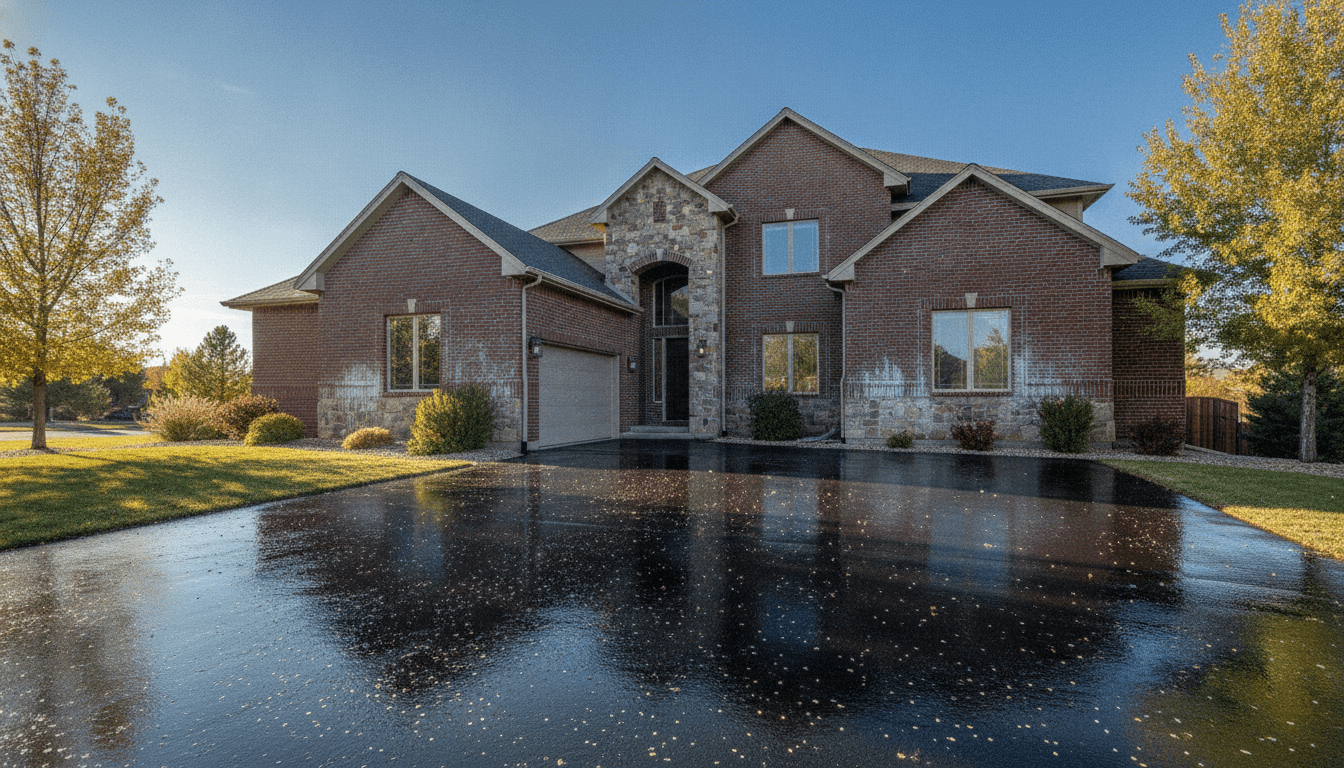
Inside that window, a house wash on a 2,200 square foot home runs $275 to $525. Driveway and walkway cleaning runs $120 to $250, and a combined visit lands at $375 to $700. St. George and the southern corridor run a couple of weeks longer on both ends of the season.
The dirt here is a mix nobody else deals with in quite the same combination. Winter inversion leaves a fine particulate film on north-facing walls, road treatments leave salt residue on concrete, and some of the hardest municipal water in the country leaves mineral deposit on everything it touches.
The Season Runs About Six Months
Freezing temperatures end the season, not the calendar. Washing concrete below 40 degrees puts water into slab joints and cracks that will freeze overnight, and that is how a driveway starts spalling.
April and May are the busiest months of the year. Everyone wants the winter film gone at the same time, and lead times on the Wasatch Front stretch to three or four weeks.
September and October are the smarter booking months. Crews are open, the weather holds, and cleaning before winter means the salt film has a clean surface to land on rather than layering onto old grime.
Mountain properties compress further. In Park City, Midway, and the Cottonwood canyons, plan on a June through September window, and expect a travel charge if the crew is coming from the valley.
What Winter Leaves on Your House
Salt Lake Valley inversions trap particulate in the basin for days at a time through December and January. That material settles onto siding, windows, and roofs, and it reads as a gray haze rather than obvious dirt.
Homeowners often do not notice it until a wash reveals the contrast. The clean section next to the unwashed section is usually two shades apart on light-colored vinyl or painted brick.
Road treatments do the more expensive damage. Magnesium chloride and salt brine track onto driveways and garage aprons, and both accelerate surface scaling on concrete.
A spring wash of the driveway and garage apron removes that residue before summer heat bakes it in. On a five year old driveway it is maintenance, and on a 25 year old driveway it slows further deterioration.
Hard Water Shows Up Everywhere in Utah
Water across most of the Wasatch Front runs high in calcium and magnesium. Every sprinkler cycle that hits a wall, a window, or a fence leaves mineral behind when it evaporates.
The result on brick and stucco is a chalky white band a foot or two above the flower beds. Pressure alone will not remove it, so it takes a masonry-safe acid treatment at $1.50 to $4.00 per linear foot, followed by a neutralizing rinse.
Windows take the same abuse. Exterior glass with sprinkler spotting needs a mineral treatment before a standard wash, which runs $6 to $14 per window.
The cheapest fix is upstream. Redirecting sprinkler heads away from the house saves the $200 to $500 acid treatment you would otherwise repeat every year or two.
Water softeners help interior fixtures but do nothing for outdoor irrigation. Most Utah homes irrigate on untreated culinary or secondary water regardless of what happens inside.
What the Common Jobs Cost
House washing prices at $0.13 to $0.28 per square foot of wall area. A 1,500 square foot rambler runs $200 to $370, and a 3,000 square foot two story runs $425 to $725.
Concrete runs $0.12 to $0.25 per square foot with a $150 minimum on standalone visits. A standard Utah driveway of 700 square feet lands at $110 to $200.
Roof cleaning runs $0.20 to $0.50 per square foot and uses low pressure chemistry on asphalt shingles. Streaking is less severe here than in humid states, so many Utah homes never need it.
Deck cleaning runs $0.20 to $0.45 per square foot, and sealing or staining adds $1.50 to $3.50 per square foot. Fence washing prices at $1.25 to $3.00 per linear foot.
Solar panel cleaning is $8 to $18 per panel. Dust accumulation between storms measurably reduces output, particularly in the southern half of the state.
Concrete, Salt, and Preventing Spalling
Utah concrete takes a beating from freeze and thaw. Water enters the surface pores, freezes overnight, expands, and lifts small flakes off the top, and a driveway that spalls badly cannot be repaired without resurfacing.
Salt residue makes it worse by increasing how often that cycle happens. Removing the residue each spring is the cheapest preventive step available.
Sealing is the second step. A penetrating silane or siloxane sealer runs $0.50 to $1.25 per square foot and needs reapplication every three to five years in this climate.
Do not seal a driveway that is already spalling without addressing the surface first. Sealer over a failing surface traps the problem rather than solving it.
New concrete should wait. Fresh pours need 28 days to cure and generally a full season before any pressure cleaning, and a good contractor will tell you to leave it alone.
Southern Utah Is Its Own Market
St. George, Hurricane, Washington, and Cedar City deal with red dust rather than inversion soot. That iron-rich dust settles into stucco texture and leaves a rust tint that a plain rinse does not remove.
Removing it takes a surfactant and often an iron-specific cleaner. Expect house wash pricing about 10 percent above Wasatch Front rates because the process takes longer.
Sun exposure is the second difference. UV at that elevation and latitude chalks paint and degrades sealer faster, so a two year sealing cycle on pavers and decks is realistic in Washington County.
The season is longer down south, running February through November, which makes scheduling easier. Summer work happens in early morning hours to keep cleaning solution from flashing off hot surfaces.
Decks, Log Homes, and Mountain Cabins
Wasatch Back properties bring a different set of surfaces. Log homes, heavy timber decks, and cedar siding need lower pressure and different chemistry than vinyl and stucco.
Log home washing runs $0.35 to $0.75 per square foot before any stain work. Restaining a log exterior is a $4,000 to $15,000 project depending on size and condition.
Deck restoration is the most common mountain job. Washing, brightening, and staining a 400 square foot deck runs $900 to $2,200, and altitude UV means redoing it every two to three years.
Snow and ice damage adds cleanup. Ice dams leave staining on soffits and fascia, and that comes off with a low pressure wash and a cleaner rather than a high pressure tip.
Stucco, Siding, and Getting the Pressure Right
A large share of Utah homes built since the 1990s are stucco or a stucco-look synthetic finish. Both fail under high pressure, and the damage shows as stripped color coat that only paint will fix.
Vinyl and fiber cement need restraint too. Water forced up under laps sits in the wall cavity, and that is a mold problem that surfaces months later.
The right method for walls is under 1,200 PSI with a cleaning solution and a thorough rinse. Pressure is for concrete, not for the side of your house.
Ask each bidder what pressure they use on stucco and what they apply to the walls. Reviewing a handful of pressure washing companies near you and asking all of them the same two questions will thin the list quickly.
What a Utah Quote Should Spell Out
The single largest source of pricing disputes in this trade is scope. A quote that says house wash without listing surfaces leaves both sides guessing.
Get eaves, fascia, soffits, gutter faces, garage doors, window exteriors, and any block or vinyl fencing named individually. Each of those is priced separately by most Utah companies.
Confirm plant protection too. Chlorine-based cleaners burn ornamentals if nobody pre-wets and rinses the beds, and replacing landscaping costs more than the wash.
Ask about the guarantee window. A 48 hour reporting period with a free return visit is the standard here, and reputable companies state it without being asked.
Common Utah Pressure Washing Questions
How often should a Utah house be washed?
Every 18 to 24 months for most homes on the Wasatch Front. Homes with sprinklers hitting the walls or heavy tree cover benefit from an annual wash.
Does washing remove hard water stains?
Not on its own. Calcium bonded to brick, stucco, or glass needs an acid treatment and neutralizing rinse, which is priced separately from the wash itself.
Can I pressure wash in the winter?
On a dry day above 40 degrees with no overnight freeze coming, siding work is fine. Concrete cleaning is the one to skip, since trapped water freezing in the slab causes real damage.
How much water does a house wash use?
Roughly 400 to 1,200 gallons for an average home. That is less than a single week of lawn irrigation on a typical Utah yard.
Is soft washing worth the extra step?
Yes for any wall surface. It costs about the same as a pressure wash, protects stucco and vinyl, and the result lasts longer because the cleaning solution does the work.
Booking a driveway wash in early spring after the salt season and a full house wash in early fall covers both of Utah's dirt problems on a single schedule. More Utah home service cost guides are on our home services blog.