electricians
Electrical Panel Upgrade Cost in Utah: 2026 Pricing, ADU Conversions, and Rocky Mountain Power Timelines
Electrical panel upgrade cost in Utah for 2026: 200 amp pricing, ADU and basement apartment loads, Rocky Mountain Power timelines, permits, and aluminum wiring.
In This Article
Electrical Panel Upgrade Cost in Utah: 2026 Pricing, ADU Conversions, and Rocky Mountain Power Timelines
Utah homeowners replacing a 100 or 125 amp panel with 200 amp service pay roughly $2,300 to $5,000 in 2026. When the meter base, mast, and service conductors go with it, most jobs land between $3,700 and $8,400. Salt Lake and Summit County pricing runs at the high end, while Cache, Uintah, and Sanpete County jobs come in 15 to 25 percent lower.
The reason panel work has picked up so much along the Wasatch Front has less to do with failing equipment than with what Utah homeowners are doing to their houses. Basement apartments and accessory dwelling units are being built by the thousands, and every one of them lands a second kitchen, a second laundry, and sometimes a second heating system onto a service that was sized for one household.
A 1978 rambler in Bountiful with 100 amp service, a gas furnace, and a gas water heater had plenty of margin. Finish the basement into a legal apartment with an electric range, a dryer, a mini split, and a bathroom with a heated floor, and the load calculation stops working.
ADUs, Basement Apartments, and Second Kitchens
Utah passed legislation in 2021 that made internal accessory dwelling units allowable in most residential zones statewide, and cities across the Wasatch Front have been permitting them steadily since. The electrical side of that conversion is where budgets get blown.
An internal ADU typically needs a dedicated circuit set for the second kitchen, its own laundry circuits, ground fault protection throughout, and in many cases a subpanel serving the apartment. If the main panel is a 20 space enclosure with two spare slots, none of that fits.
The related question is metering. Most Utah cities allow an internal ADU to share the main service and a single meter, though some require separate disconnects, so ask your building department before an electrician designs anything. Separate metering, where allowed, is a much larger project involving a new meter base and utility coordination.
Heat pump conversions are stacking on top of the ADU trend. Utah utilities have been promoting cold climate heat pumps as an alternative to gas furnaces, and a homeowner who adds one while keeping a gas backup still needs a new dedicated circuit and often a larger service.
What the Base Job Includes
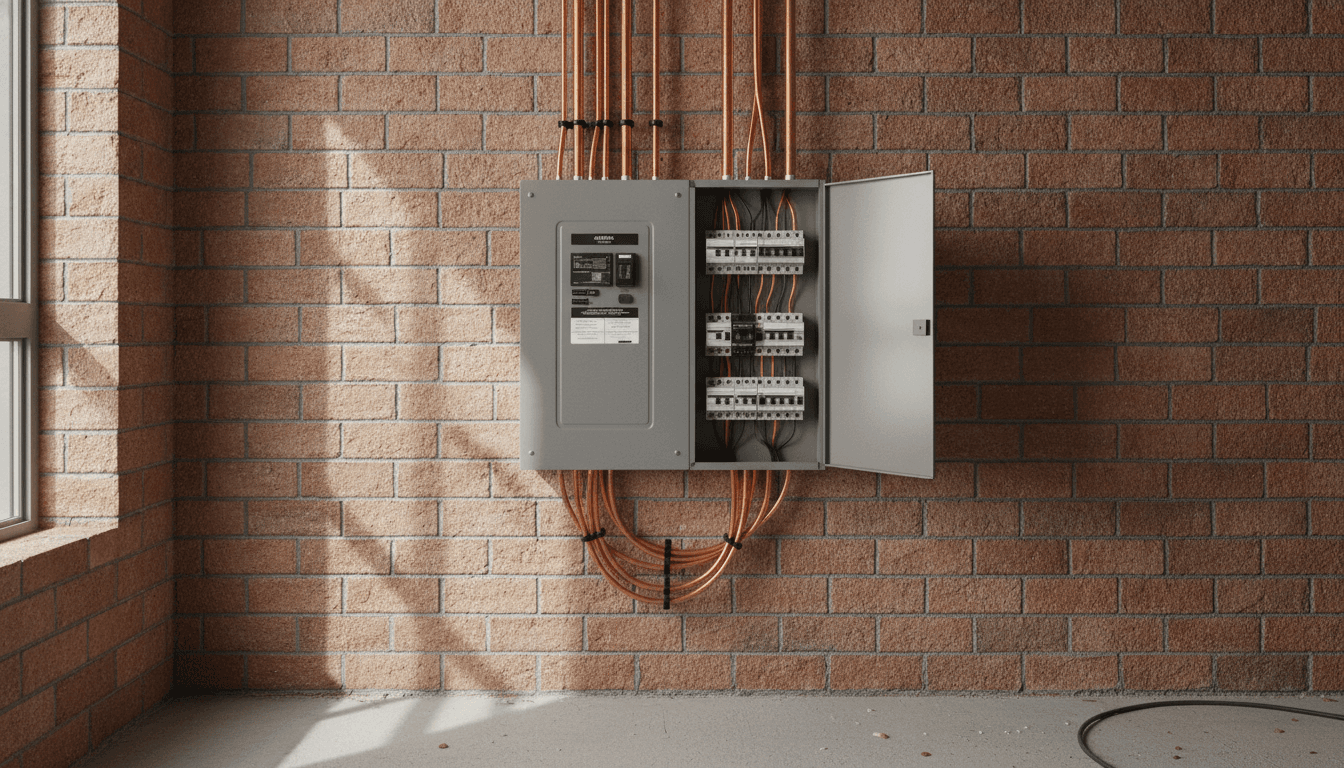
A standard panel replacement covers the load center, breakers for every existing circuit, two ground rods, bonding at the water and gas piping, a labeled directory, the permit, and the inspection. A two person crew moving 28 circuits into a new enclosure fills a working day.
Arc fault and ground fault breakers are the swing factor in most bids. Utah adopts the National Electrical Code with state amendments, and the current edition requires protection on far more circuits than a 1980s panel carries. Twenty five protected breakers instead of twenty five standard ones can shift a quote $800 to $1,500.
Panel Location and Working Clearance
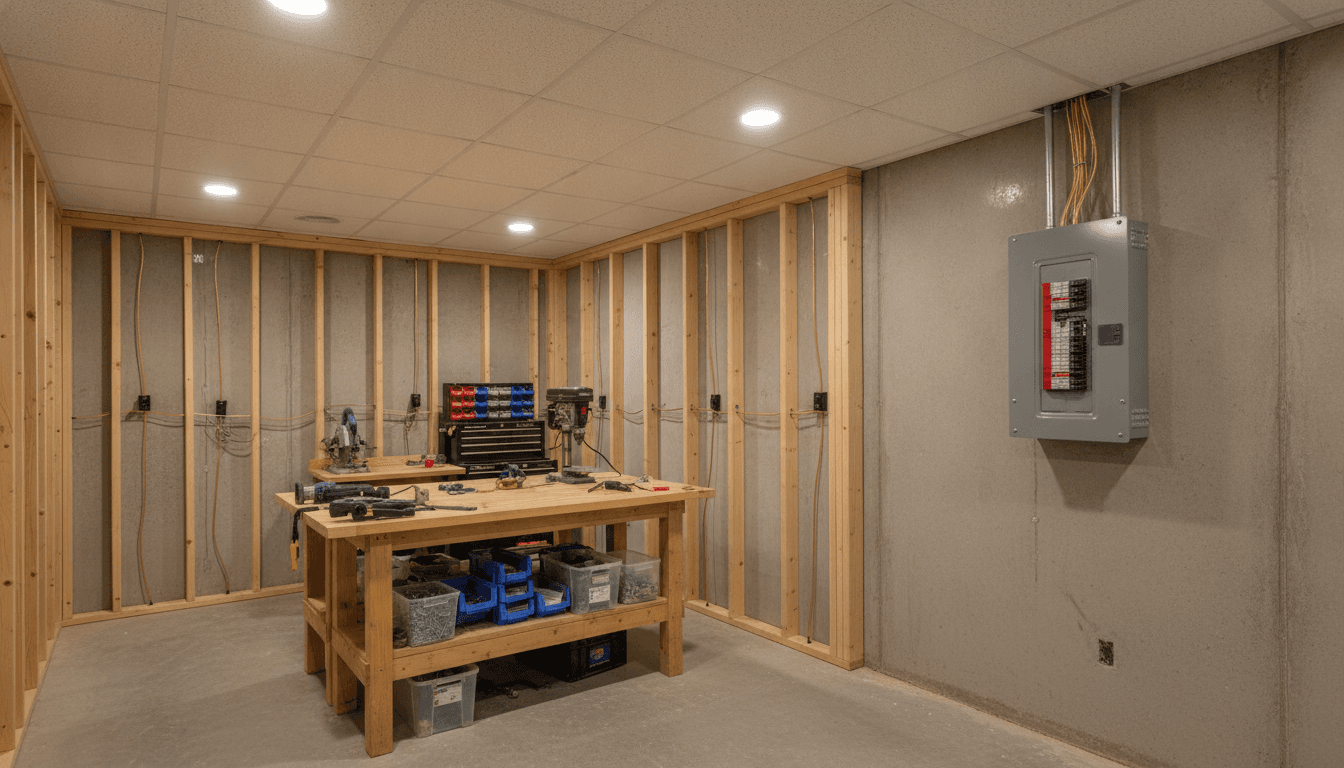
Utah homes overwhelmingly have basements, and the panel usually sits on a basement wall near the meter or in an unfinished mechanical room. That is the easiest layout to replace because the electrician has room to work and short runs to the meter.
The problem shows up in finished basements. Code requires a defined clear space in front of the panel, and a homeowner who framed a bedroom closet around the panel during a remodel has created a relocation job. Moving a panel adds $800 to $2,500 depending on the run.
Rocky Mountain Power and How Your Schedule Gets Set
Rocky Mountain Power serves the large majority of Utah, and its process for a service change runs through an application submitted by your licensed electrician. Municipal utilities cover several cities including Provo, Bountiful, Murray, Logan, and St. George, and each of those sets its own lead times and equipment standards.
For a panel only swap where the meter base and service conductors stay, the utility pulls the meter, the electrician works, the city inspects, and the meter goes back. In most Salt Lake County jobs that happens the same day, meaning six to nine hours without power.
For a full service change, the inspection has to clear before the utility will reconnect. Between the inspector's approval reaching the utility and a truck being dispatched, that can put you overnight, and in busy spring months it has stretched to two or three days along the Wasatch Front.
Ask your electrician which of those two your job is, in writing, before you schedule. It is the difference between a long day and a hotel stay.
Winter Work and When to Book
Panel work happens year round in Utah, and the constraint is not the cold so much as the crew calendar. Electricians here are busiest from April through October when new construction and remodel work peaks, and January through March is when you will get the best availability and often a better price.
The counterargument is the obvious one. Losing power for a day in January means losing the furnace blower, so if your job might run overnight, schedule it in a shoulder month instead.
Solar and Battery Interconnection
Utah has a substantial rooftop solar base, and interconnection is the other reason panels get replaced here. Code limits the combined rating of the main breaker and the solar backfeed breaker to 120 percent of the bus bar rating, which leaves no room on a 125 amp bus with a 125 amp main.
A main breaker derate solves it on some panels for a few hundred dollars, and a line side tap solves it on others. Get that evaluated before agreeing to a replacement your installer priced into the array package, since a standalone electrician often quotes the same work $800 to $1,500 cheaper.
What Turns Up Behind the Cover in Older Utah Houses
Aluminum branch wiring is the most common expensive surprise, and it shows up in homes built roughly between 1965 and 1973 across Salt Lake, Davis, and Weber counties. Aluminum expands and contracts more than copper, connections loosen over time, and the fix is a set of approved connectors at every device.
Pigtailing an entire house runs $1,500 to $5,000 on top of the panel work depending on the number of devices. It is not optional if an insurer or an inspector has flagged it.
Undersized service conductors are the other frequent finding. A house that had 100 amp service upgraded to a 150 amp panel at some point in the 1990s may still have the original conductors from the weatherhead, and a real 200 amp upgrade means replacing them.
Knob and tube wiring turns up in the older Avenues, Sugar House, and Ogden neighborhoods. A panel replacement does not fix knob and tube, and several insurers will not write a policy on a house that has active circuits on it.
Grounding is worth one question of its own. Utah's dry, rocky soil makes for poor ground rod contact in a lot of places, and code allows a supplemental electrode or a concrete encased electrode where resistance is too high. If a bid mentions a single ground rod and nothing else, ask what the plan is if it does not test out.
Licensing, Permits, and Comparing Bids
Utah licenses electricians through the Division of Professional Licensing, and both the individual master electrician and the contracting business hold credentials you can look up in the state's public database. Verify both before signing.
Permits are pulled by the contractor through the city or county building department, and residential electrical permit fees generally run $75 to $250 depending on the jurisdiction. Salt Lake City, Provo, West Jordan, and Park City each run their own process.
To compare three bids fairly, make each company answer the same list: panel brand and bus rating, breaker count and how many are arc fault or ground fault, whether the meter base and mast are included, whether a subpanel for the basement is in scope, the permit fee, and expected hours without power. Written scopes from licensed electricians across Utah sort themselves quickly once every bid describes the same job, and our Utah home services cost guides cover the projects that usually follow a panel upgrade.
Ask what the finished panel will look like on paper as well as on the wall. A typed directory that names each circuit by room and device, plus photos of the work before the cover goes on, is what a future electrician or a home inspector will rely on, and almost no existing Utah panel has either.
Frequently Asked Questions
Do I need a panel upgrade to build a basement apartment in Utah?
Not always. Plenty of homes with 200 amp service and open breaker spaces can add a subpanel for an ADU without touching the main. The trigger is usually a 100 or 125 amp service, a full panel, or a second electric range and dryer.
How much does a subpanel cost in Utah?
A 100 amp subpanel fed from an existing main, installed in a Utah basement with a reasonable feeder run, typically costs $1,100 to $2,400 including the permit. Long runs to a detached garage or shop can double that.
Will my insurer require a panel replacement?
Some do. Federal Pacific Stab-Lok, Zinsco, and active knob and tube wiring are the three findings that most often trigger a nonrenewal notice in Utah, and carriers have gotten less flexible about all three in the last few years.
Is 200 amp service enough for a Utah home with an ADU and an EV?
For most, yes. A 2,600 square foot house with gas heat, a basement apartment, and one Level 2 charger usually calculates well under 200 amps. All electric heat plus two chargers is where a 320 amp service enters the conversation.